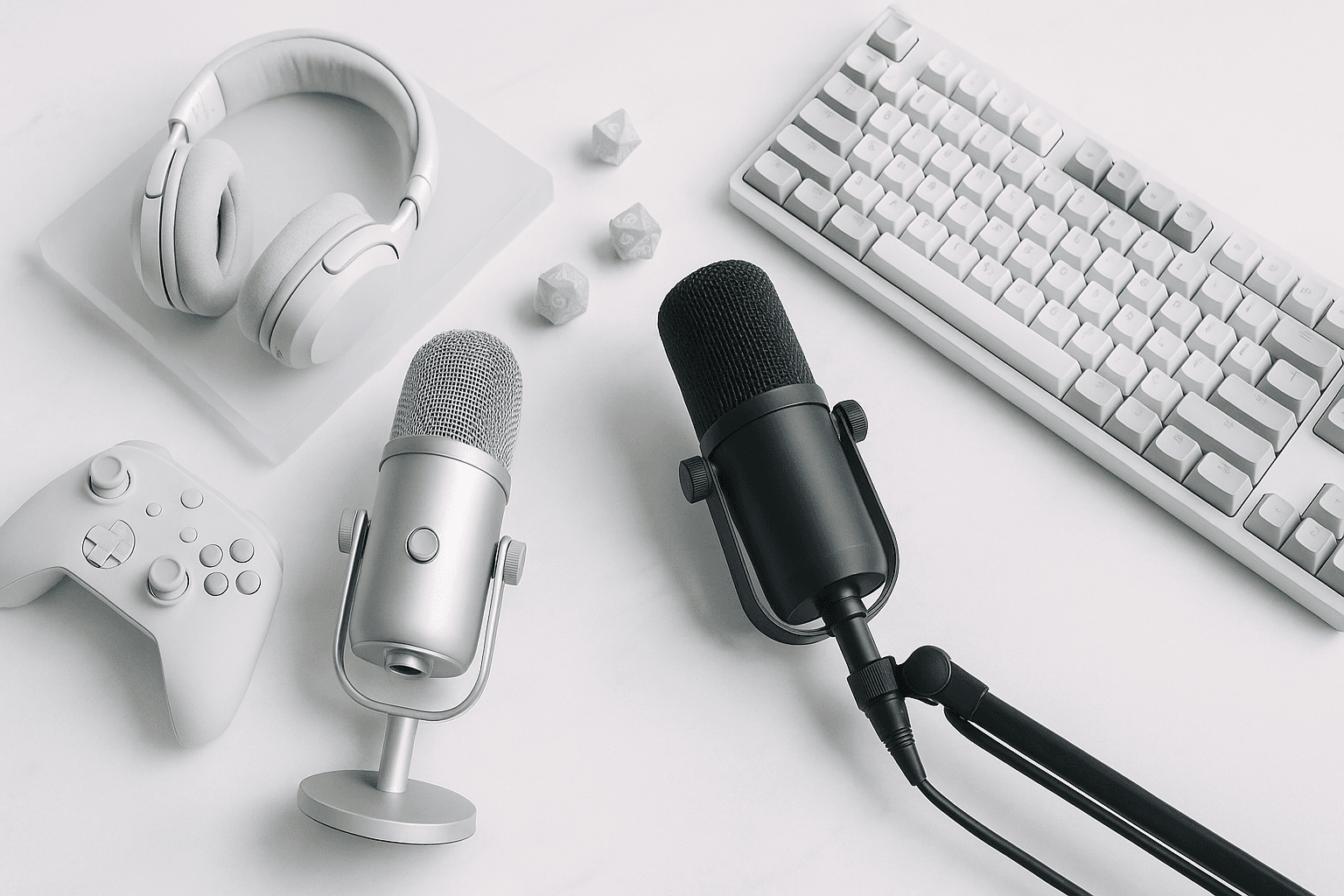
The streaming-mic shelf at any electronics store has roughly forty options, and most of them sound like a tin can rattling down a hallway. We bought, tested, and returned the bulk of them so you don't have to — and the shortlist that survived 2026 is a lot smaller than the marketing would have you believe.
If your room has a fan, a mechanical keyboard, or a roommate three feet away, the mic you pick matters more than your camera, your lighting, or your gaming headset choice. Bad audio is the single fastest way to lose a viewer in the first ten seconds.
For most creators in untreated rooms, the Shure MV7+ remains the best USB-and-XLR hybrid streaming microphone in 2026 thanks to its dynamic capsule, on-board DSP, and forgiving off-axis rejection. Pure XLR users on a budget should pick the Shure SM7dB; pure USB beginners should grab the Elgato Wave DX.
Why Your Mic Matters More Than Your Camera
Viewers will tolerate a 720p webcam for hours. They will not tolerate thirty seconds of room echo, keyboard clack, or the hollow boxiness that condenser mics produce in an untreated bedroom.
That said, the mic-shopping landscape is genuinely confusing — USB versus XLR, condenser versus dynamic, cardioid versus supercardioid, on-board DSP versus none. The good news is that for ninety percent of streamers, the right answer collapses to a handful of dynamic mics with tight pickup patterns.
How Common Are Bad-Audio Drop-Offs?
Internal Twitch and YouTube creator data has long suggested that audio quality is among the top reasons new viewers click away in the first ten seconds. Anecdotally, every coach we've talked to puts mic upgrades ahead of camera upgrades for channels under 1,000 followers.
USB vs XLR: Which Should You Buy?
USB mics plug directly into your PC and require zero extra gear, which makes them the right call for solo streamers, beginners, and anyone who doesn't want to learn what a preamp is. XLR mics route through an audio interface or mixer and give you cleaner gain, hot-swappable upgrades, and better long-term flexibility.
Most serious creators eventually graduate to XLR, but the gap has narrowed considerably — modern hybrid mics like the MV7+ let you start USB and migrate to XLR without rebuying anything.
Buy USB if you stream solo, want zero setup, and have a budget under $300. Buy XLR if you record podcasts with co-hosts, plan to add a second mic later, or already own an audio interface. Hybrid mics like the Shure MV7+ let you start USB and switch to XLR later without buying a new microphone.
Condenser vs Dynamic: The Single Biggest Decision
Condenser mics are sensitive, detailed, and great in treated studios — they will also pick up your fridge, your air conditioner, and your neighbor's dog. Dynamic mics are less sensitive, reject background noise aggressively, and forgive untreated rooms.
For ninety-five percent of streamers, the answer is dynamic. The Blue Yeti and its condenser cousins built their reputation in treated YouTube studios in 2014; in a 2026 bedroom with a mechanical keyboard, they are the wrong tool.
The 2026 Best Streaming Microphones, Ranked
| Mic | Type | Connection | Best For | Price |
|---|---|---|---|---|
| Shure MV7+ | Dynamic | USB + XLR | Untreated rooms, solo streamers | $279 |
| Shure SM7dB | Dynamic | XLR | Podcasters, broadcast voice | $499 |
| Elgato Wave DX | Dynamic | XLR | Budget XLR starters | $99 |
| Rode PodMic USB | Dynamic | USB + XLR | Hybrid podcasters | $199 |
| Shure SM7B | Dynamic | XLR | Pro broadcast (with Cloudlifter) | $399 |
| Audio-Technica AT2040 | Dynamic | XLR | Mid-budget XLR | $149 |
| Beyerdynamic FOX | Condenser | USB | Treated rooms, vocals | $179 |
1. Shure MV7+ — Best Overall
The MV7+ is the mic we recommend more often than any other, and the reason is simple — it sounds genuinely broadcast-grade in rooms where every condenser sounds like a parking garage. The on-board DSP, real-time denoiser, and auto-leveling make it nearly impossible to sound bad on USB.
The XLR output means that when you eventually buy a Rodecaster or a GoXLR, the MV7+ comes with you. After all, the worst feeling in gear ownership is buying twice.
2. Shure SM7dB — Best XLR for Podcasts
The SM7dB is the SM7B with a built-in active preamp, which means you no longer need a Cloudlifter to drive it properly. For multi-host podcasts and treated home studios, this is the cleanest broadcast voice you can buy without going into the four-figure category.
3. Elgato Wave DX — Best Budget XLR
If you already own a Wave XLR or a Focusrite Scarlett and need a $99 starter mic, the Wave DX punches massively above its price. It is not as forgiving as the MV7+ and it needs a clean preamp, but the raw capsule is excellent for the money.
4. Rode PodMic USB — Best Hybrid Under $200
The PodMic USB is the closest thing to an MV7+ at the $199 tier — same dynamic capsule philosophy, same USB-and-XLR hybrid output, slightly less polished DSP. For two-host podcast setups on a budget, it's the obvious pick.
5. Shure SM7B — The Legend (with Caveats)
The SM7B is still extraordinary, and it's still the mic Joe Rogan made famous. However, you will need a Cloudlifter or a high-gain preamp to drive it, which pushes the all-in cost past the SM7dB — at which point the SM7dB is the smarter buy.
6. Audio-Technica AT2040 — Best Mid-Budget XLR
The AT2040 is a hypercardioid dynamic that competes directly with the PodMic and Wave DX, with a slightly tighter pickup pattern that helps in noisy rooms. If your roommate's fan lives in your audio profile, the AT2040 deserves a spot on your shortlist.
7. Beyerdynamic FOX — Only If Your Room Is Treated
The FOX is the one condenser we'll still recommend, and only with the caveat that you have acoustic panels on at least two walls. In a treated space it sounds genuinely beautiful for vocals; in an untreated bedroom it will betray you on stream one.
The Shure SM7B is still an excellent broadcast microphone, but the newer Shure SM7dB includes a built-in active preamp at a similar all-in cost. Unless you already own a Cloudlifter and a high-gain interface, the SM7dB is the smarter 2026 purchase for most podcasters and streamers.
What About the Blue Yeti and HyperX QuadCast?
Both are condenser mics in disguise as streaming gear, and both will pick up keyboard clack, fan hum, and room reverb the moment you start a session. They became famous in an era when YouTube creators worked from treated closets — that era is over for most of the audience.
If you already own one and your room is treated, keep streaming with it. If you're shopping new in 2026, skip them.
Setup: Five Steps to Sound Professional Tonight
Position dynamic streaming microphones 4-6 inches from your mouth, slightly off-axis to reduce plosives. Closer than 4 inches creates breathy plosives and bass proximity boost; farther than 6 inches lets your room's reverb and background noise into the recording. Always use a boom arm and pop filter.
Budget Tiers: What to Buy at Every Price
Budgets matter, and the streaming-mic market has clear breakpoints where the next dollar genuinely buys you better audio. Here's how the tiers actually shake out in 2026.
| Budget | Recommendation | Why |
|---|---|---|
| Under $100 | Elgato Wave DX (needs interface) | Best raw capsule at the price |
| $150-$200 | Rode PodMic USB | Hybrid USB+XLR, no interface needed |
| $250-$300 | Shure MV7+ | Best overall — DSP, hybrid, untreated-room friendly |
| $400-$500 | Shure SM7dB | Broadcast voice, no Cloudlifter needed |
| $600+ | SM7dB + Rodecaster Pro 2 | Multi-host podcast endgame |
Common Streaming Mic Mistakes
The mic itself is only half the equation — the other half is the dozen small mistakes that turn a $300 microphone into something that sounds like a $30 one. Avoid these and your audio will jump a full tier without spending another dollar.
The most common reasons an expensive microphone sounds bad are: untreated room reverb, desk-mounted stand transmitting vibration, mic positioned too far from the mouth, gain set too low forcing software boost, and missing noise gate. Fix all five before blaming the mic itself.
Streaming Mic FAQ
Do I need an audio interface for an XLR microphone?
Yes. XLR mics produce a low-level signal that needs a preamp to reach line level — an audio interface like a Focusrite Scarlett Solo or Elgato Wave XLR provides this. Plan to spend $130-$200 on the interface in addition to the mic itself.
Is the Blue Yeti still worth buying in 2026?
Only if your room is acoustically treated and you have no nearby fans, mechanical keyboards, or roommates. In a typical untreated bedroom, the Yeti's condenser capsule will pick up significantly more background noise than a dynamic mic at the same price.
What's the difference between the SM7B and SM7dB?
The SM7dB is functionally an SM7B with a switchable +18 dB or +28 dB active preamp built in, eliminating the need for a Cloudlifter or high-gain interface. For most buyers in 2026, the SM7dB is the better value.
Can I use a streaming microphone for music recording?
Dynamic streaming mics like the SM7B and MV7+ are excellent for vocals and electric guitar amps but less suited for acoustic guitar or detailed instrument recording, which benefit from large-diaphragm condensers in treated rooms.
How long should a quality streaming microphone last?
A well-built dynamic mic like a Shure SM7B routinely lasts 15-20+ years with normal use. The capsule has no moving parts to wear out, and the only common failure points are the XLR connector and grille foam, both of which are user-replaceable.
The Bottom Line
For most streamers, podcasters, and YouTubers in 2026, the answer is the Shure MV7+ — it's hybrid, it's forgiving, and it sounds like broadcast in a bedroom. If you're on a budget, start with the Elgato Wave DX plus a basic interface; if you're going pro, skip straight to the SM7dB.
And of course, the mic is only one piece of the desk. Once your audio is sorted, take a look at your gaming monitor setup, your gaming chair, and your mechanical keyboard — the rest of the desk should match the broadcast quality your mic is now delivering. If you stream Roblox content, our Roblox horror games guide and The Forge codes tracker are the next stops on the channel-growth path.