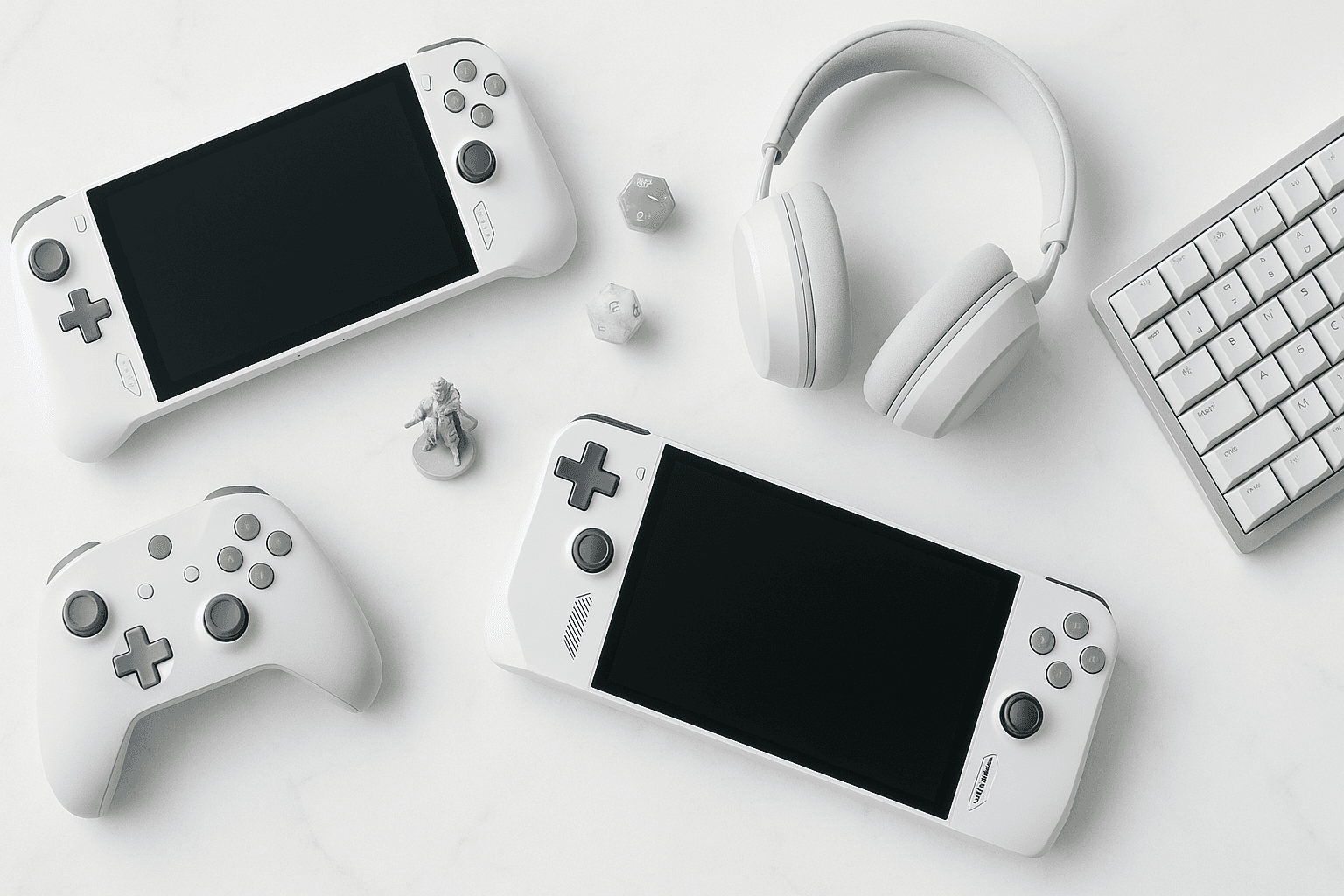
The handheld gaming PC aisle got crowded fast. A dozen devices now promise console-grade performance in your palm, and honestly, most of them are compromises you'll feel inside a week.
We tested the three that actually matter — Valve's Steam Deck OLED, ASUS's ROG Ally X, and Lenovo's Legion Go — on the same games, the same Wi-Fi, and the same charger. This is the head-to-head buyer's guide the category has needed since it stopped being a novelty.
The Steam Deck OLED is the best handheld gaming PC of 2026 for most people, thanks to its OLED screen, long battery, and polished SteamOS. The ROG Ally X wins on raw power, and the Legion Go wins on screen size.
What Changed For Handheld PCs In 2026
For the first couple of years, every handheld PC asked you to make the same painful trade: power or battery, never both. The 2026 generation finally narrowed that gap, and two upgrades did most of the heavy lifting.
The first is OLED. Moving from LCD to OLED panels brought deeper blacks, higher peak brightness, and HDR that actually means something in a dark dungeon or on a neon-lit racetrack.
The second is thermals and battery density. Larger cells and smarter cooling let these devices hold a stable clock for longer, so frame rates stop collapsing twenty minutes into a session.
Keep in mind that none of these handhelds will match a desktop graphics card. The win here is freedom — full PC libraries, on the couch, on a flight, or in bed, without streaming lag.
What's more, the software matured alongside the hardware. SteamOS got steadier, Windows handheld modes got less hostile, and per-game power profiles became the norm rather than a tinkerer's hobby.
Handheld Gaming PCs Compared At A Glance
Before the verdicts, here is how the three devices line up on the specs that decide real-world feel. Note that we've left exact pricing out on purpose, because handheld prices move week to week — always check the current retailer listing.
| Device | Display | Chip / RAM | Battery | OS | Weight | Best For |
|---|---|---|---|---|---|---|
| Steam Deck OLED | 7.4-inch OLED, 90Hz, HDR | Custom AMD APU / 16GB | ~50Wh (longest real play) | SteamOS (Linux) | ~640g | Best overall |
| ROG Ally X | 7-inch IPS, 120Hz, 1080p | Ryzen Z1 Extreme / 24GB | ~80Wh (largest cell) | Windows 11 | ~678g | Most power |
| Lenovo Legion Go | 8.8-inch IPS, 144Hz, 1600p | Ryzen Z1 Extreme / 16GB | ~49Wh | Windows 11 | ~854g | Biggest screen |
The table tells one clear story: there's no single winner on paper. Each device leads on a different axis, which is exactly why the right pick depends on how and where you play.
Steam Deck OLED: The Best Handheld For Most People
Valve didn't reinvent the Steam Deck with the OLED model — it refined nearly everything that mattered. The result is the most coherent handheld on the market, where the hardware, the store, and the OS were all designed to work together.
The 7.4-inch OLED panel is the headline, and it earns top billing. HDR content pops, blacks are genuinely black, and the 90Hz refresh rate makes menus and 2D games feel silky.
Battery life is the quieter triumph. Thanks to a larger cell and the efficiency of its custom AMD chip, the Steam Deck OLED routinely outlasts its Windows rivals in like-for-like play.
The Steam Deck OLED is worth the upgrade over the LCD model for its brighter HDR OLED screen, longer battery life, lighter weight, and faster Wi-Fi. It's the most refined handheld PC you can buy in 2026.
SteamOS is the deciding factor for newcomers. It boots straight into a console-like interface, verifies which games run well, and sidesteps the fiddly desktop friction that defines the Windows handhelds.
The trade-off is the chip. On paper it's the least powerful of the three, so the most demanding new releases ask for lower settings here than on the Ryzen Z1 Extreme devices.
Best for: the majority of players who want to power on, install, and play without managing Windows. If your library lives on Steam, this is the natural home for it.
ROG Ally X: The Most Raw Power In A Handheld
If the Steam Deck OLED is the diplomat, the ROG Ally X is the muscle. ASUS took the lessons of the original Ally and fixed its two biggest sins: battery and ergonomics.
The standout upgrade is the battery, which roughly doubled over the first Ally. That single change turns the Ally from a device you babysit near an outlet into one you can actually take on the road.
The ROG Ally X roughly doubles the original Ally's battery capacity to around 80Wh, the largest cell of the big three. Paired with 24GB of RAM and the Ryzen Z1 Extreme, it's the most powerful mainstream handheld.
The Z1 Extreme chip and a generous 24GB of RAM give it real headroom. Demanding AAA games hold higher settings and steadier frame rates here than on the Steam Deck.
The catch is Windows 11. It's the most flexible OS — any launcher, any store, any mod — but it's also the most demanding of your patience, with driver updates and a desktop never far away.
The redesigned grips deserve a mention too. The Ally X is more comfortable for long sessions than its predecessor, with better weight distribution despite a slightly heavier frame.
Best for: power users who want maximum frames and access to every PC storefront, and who don't mind managing Windows to get there. It's also the pick if you live across Game Pass, Epic, and Steam at once.
Lenovo Legion Go: The Biggest Screen And The Most Versatility
Lenovo went its own way with the Legion Go, and the gamble mostly pays off. Its 8.8-inch, 144Hz, 1600p display is the largest and sharpest of the three by a comfortable margin.
That big, fast panel is genuinely transformative for some genres. Strategy games, racing titles, and anything with a dense UI breathe on a screen this size in a way they simply can't on a 7-inch handheld.
The Lenovo Legion Go has the best screen of the big three: an 8.8-inch, 144Hz, 1600p display larger and sharper than the Steam Deck OLED or ROG Ally X. The trade-off is more weight and shorter battery.
Its party trick is detachable controllers, Switch-style, that slide off the main body. One even stands up as a vertical mouse for FPS aiming, a clever touch for twitch shooters.
That versatility comes at a cost, and the cost is heft and battery. The Legion Go is noticeably the heaviest device here, and its smaller battery drains faster while feeding that demanding high-resolution screen.
Best for: players who prioritize screen real estate and flexibility over portability, especially for strategy, racing, and handheld-as-tablet use. Browse our companion roundup of the best racing games for titles that shine on a 144Hz panel.
SteamOS Vs Windows 11: Which Handheld OS Is Better?
This is the real fork in the road, and it matters more than any single spec. The chip determines your ceiling, but the OS determines your day-to-day experience.
SteamOS is simpler and more battery-efficient, ideal if your library is on Steam and you want a console-like experience. Windows 11 is more powerful and flexible — every store and mod works — but needs more management.
SteamOS, on the Steam Deck, behaves like a console. It sleeps and resumes instantly, sips power, and rarely throws a desktop-style error in your face.
Windows 11, on the Ally X and Legion Go, behaves like a PC — because it is one. You get every launcher, every mod, and every emulator, but you also inherit every update prompt and driver quirk.
The rule is simple. Buy SteamOS if you want an appliance, and buy Windows if you want a tinker-friendly machine that doubles as a pocket computer.
How To Choose The Right Handheld Gaming PC
Strip away the spec sheets and the decision comes down to a few honest questions about how you actually play. Here are the factors that should drive your pick.
- Where you play. If you game mostly on the move and away from outlets, battery efficiency matters more than peak frames — advantage Steam Deck OLED and Ally X.
- What you play. A Steam-only library leans SteamOS, while a sprawling collection across Epic, Game Pass, and emulators leans Windows.
- Screen versus pocketability. The Legion Go's big screen is a joy at home but a burden in a bag, so weigh portability against immersion honestly.
- Tinkering tolerance. SteamOS rewards people who just want to play, and Windows rewards people who enjoy tuning settings and chasing mods.
All of these add up to a single principle: match the device to your habits, not to the highest number on the box. The most powerful handheld is worthless if its quirks keep you from actually playing.
Getting More From Your Handheld: Docking And Accessories
Every device here doubles as a tiny desktop when you dock it. Plug into a monitor, add input, and you've got a living-room console or a travel PC in one.
For couch sessions, a dock plus a wireless pad transforms the experience — see our picks for the best gaming controllers to pair with a docked handheld. Output to a large panel and the same hardware feels like a different class of machine.
If you're building a desk setup around one of these, the display is where the upgrade lands hardest. Our roundup of the best gaming monitors covers panels that make the most of a docked Z1 Extreme.
And if a handheld ultimately feels too compromised for your needs, the honest alternative is a portable laptop. Our guide to budget gaming laptops covers machines that trade pocketability for a keyboard and more sustained power.
Here's how we weighed each device during testing:
Display — OLED contrast and refresh rate did more for perceived quality than raw resolution in everyday play.
Battery — we measured real gameplay endurance, not idle estimates, because that's the number you actually live with.
Ergonomics — weight and grip comfort decide whether a session ends because you're done or because your hands are.
Ecosystem — the OS and store you'll actually use mattered as much as the silicon underneath.
Handheld Gaming PC FAQs
A few questions come up again and again when people shop for their first handheld. Here are the short answers.
Is the Steam Deck OLED better than the LCD model?
Yes. The OLED model adds a brighter HDR screen, longer battery life, lighter weight, and faster Wi-Fi, with the same core experience. It's the version to buy.
Does the ROG Ally X have better battery than the original Ally?
Significantly. The Ally X roughly doubles the battery capacity to around 80Wh, which was the original Ally's biggest weakness, turning it into a genuinely portable handheld.
Can you install Windows games on the Steam Deck?
Mostly, yes. SteamOS runs the vast majority of Windows games through its Proton compatibility layer, and you can also install Windows itself, though that sacrifices the polished SteamOS experience.
Which handheld gaming PC has the best screen?
The Legion Go has the largest and sharpest at 8.8 inches, 144Hz, and 1600p. But the Steam Deck OLED's HDR OLED panel arguably looks better despite its smaller size and lower resolution.
Are handheld gaming PCs powerful enough for AAA games?
Yes, with tuned settings. All three run modern AAA titles at playable frame rates when you dial settings to handheld-appropriate levels, and per-game power profiles make this routine rather than a chore.
The Bottom Line
The handheld PC category grew up in 2026, and there's now a right answer for almost everyone. Finding a good device is the easy part now — the real work is matching the right one to how you play.
For most players, the Steam Deck OLED is the easy recommendation, blending the best screen-to-battery balance with the least friction. Step up to the ROG Ally X for raw power, or the Legion Go for that gorgeous big screen.
Once you've picked your handheld, round out the setup with a stack of games worth playing. Start with the best open-world games on Steam, all of which run beautifully on every device here.